📑 Research Log SAMLIP-005 | 2026.07
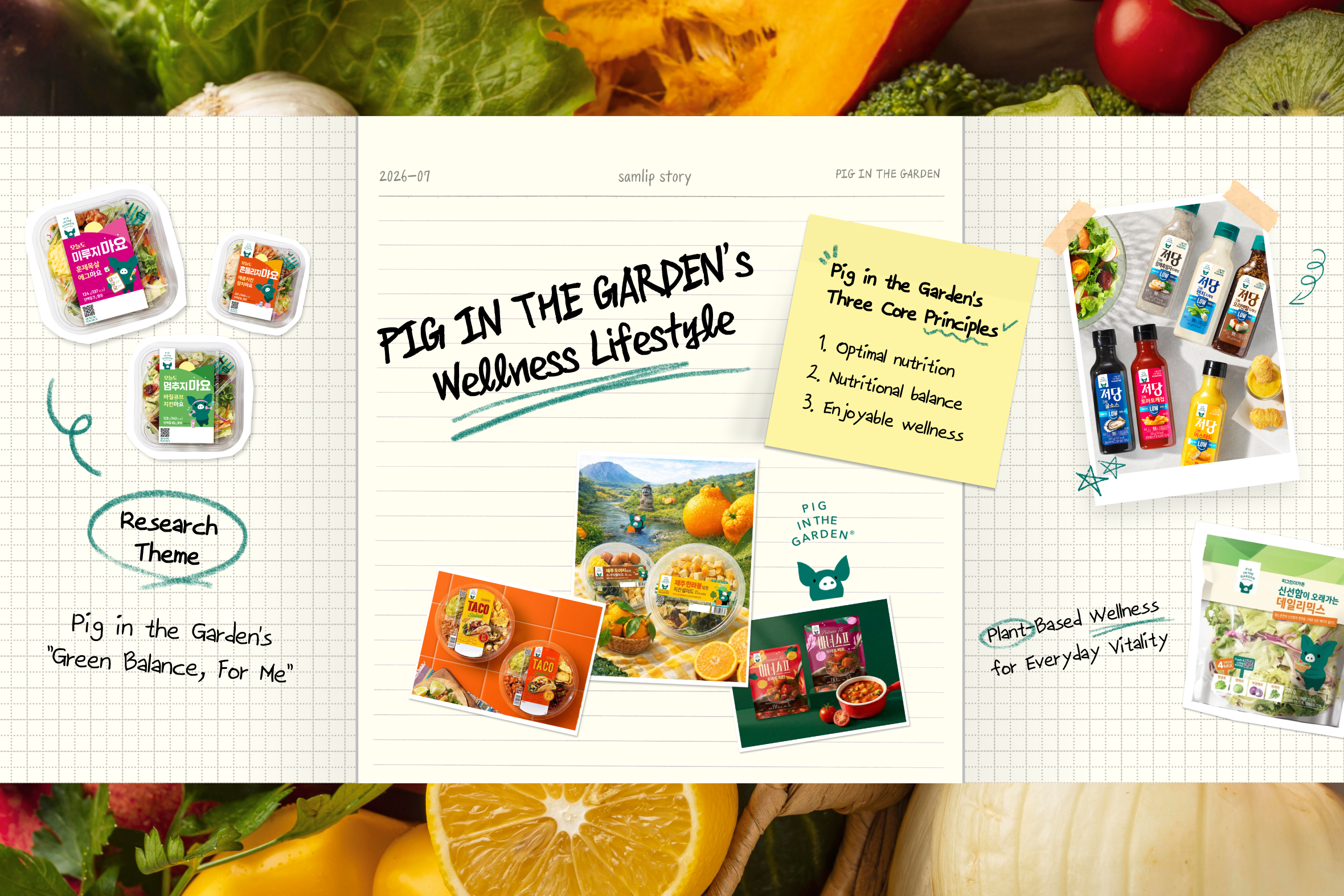
Research Topic “My Green Balance” — How is PIG IN THE GARDEN <Green Wellness> designed? 🐷
Hypothesis Green wellness must be a “sustainable routine,” not a “restrictive diet.”
Keywords Plant Based / Green Balance / Well-Balanced / Healthy Pleasure / Low-Spec
From bakeries to everyday meals, Samlip is there for every delicious moment in your life — across a wide range of brands you know and love. At Samlip Stories, we want to capture the stories behind the brands— the people who create these products, and everything that goes into making them.
This research log features PIG IN THE GARDEN, a brand that proposes a plant-based green wellness routine. 🐷
🌿 [Plant-Based Wellness = Not Just Salad] Breaking the stereotype
These days, healthy eating is no longer sustainable if it’s based on “just enduring it.” Especially with plant-based diets, many people think they must eat only salads—but even that thought can feel exhausting.
No matter how healthy something is, it needs to taste good and be convenient to last long-term. And ideally, it should also be balanced in sugar and nutrition. Recently, PIG IN THE GARDEN has been expanding its wellness lineup in response to these changes.
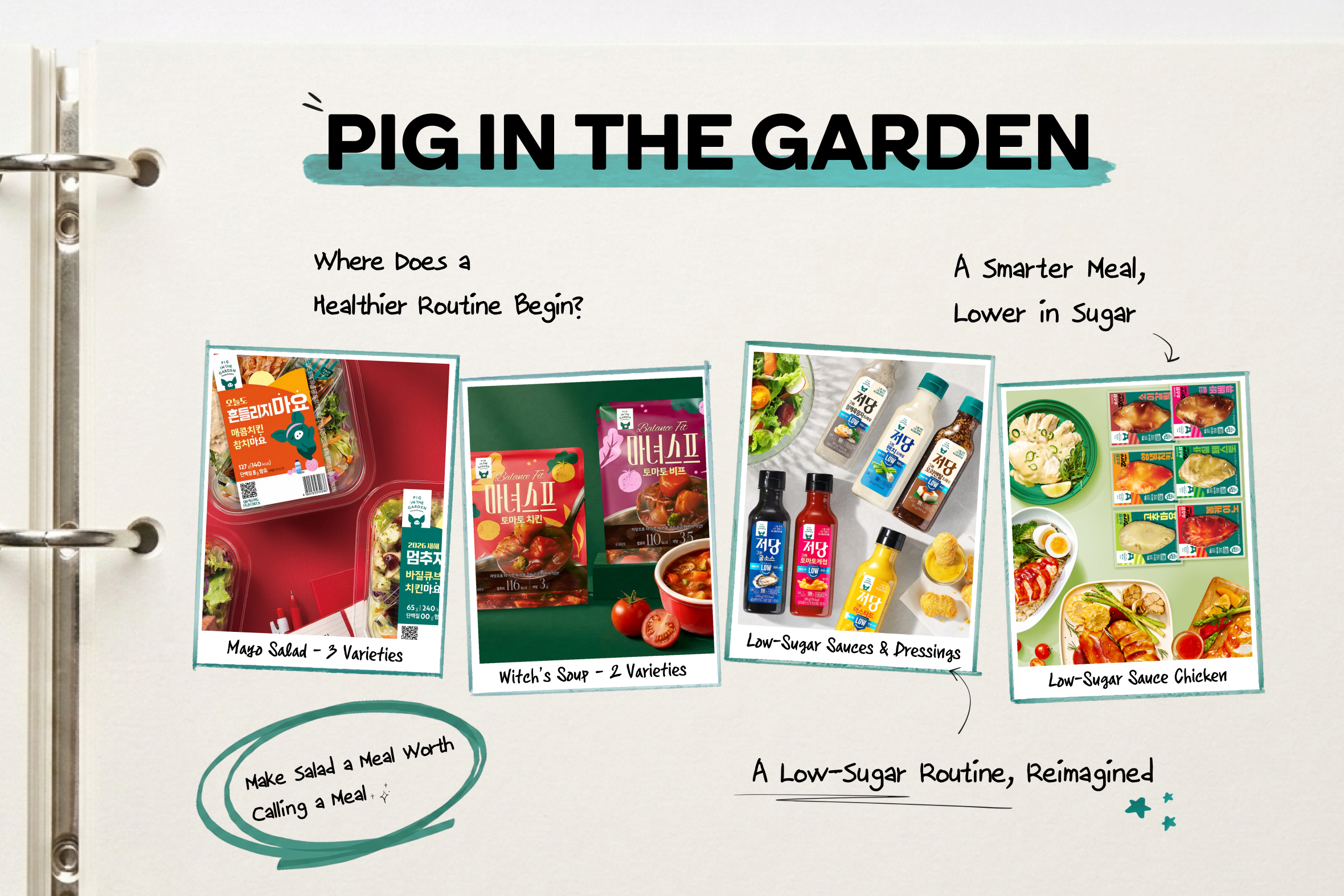
Starting with salads, and expanding into scoop salads, dressings, and white meat protein products, PIG IN THE GARDEN has broadened healthy meal options. Now, based on vegetables, fruits, and grains, it aims to create balanced diets and a healthier lifestyle.
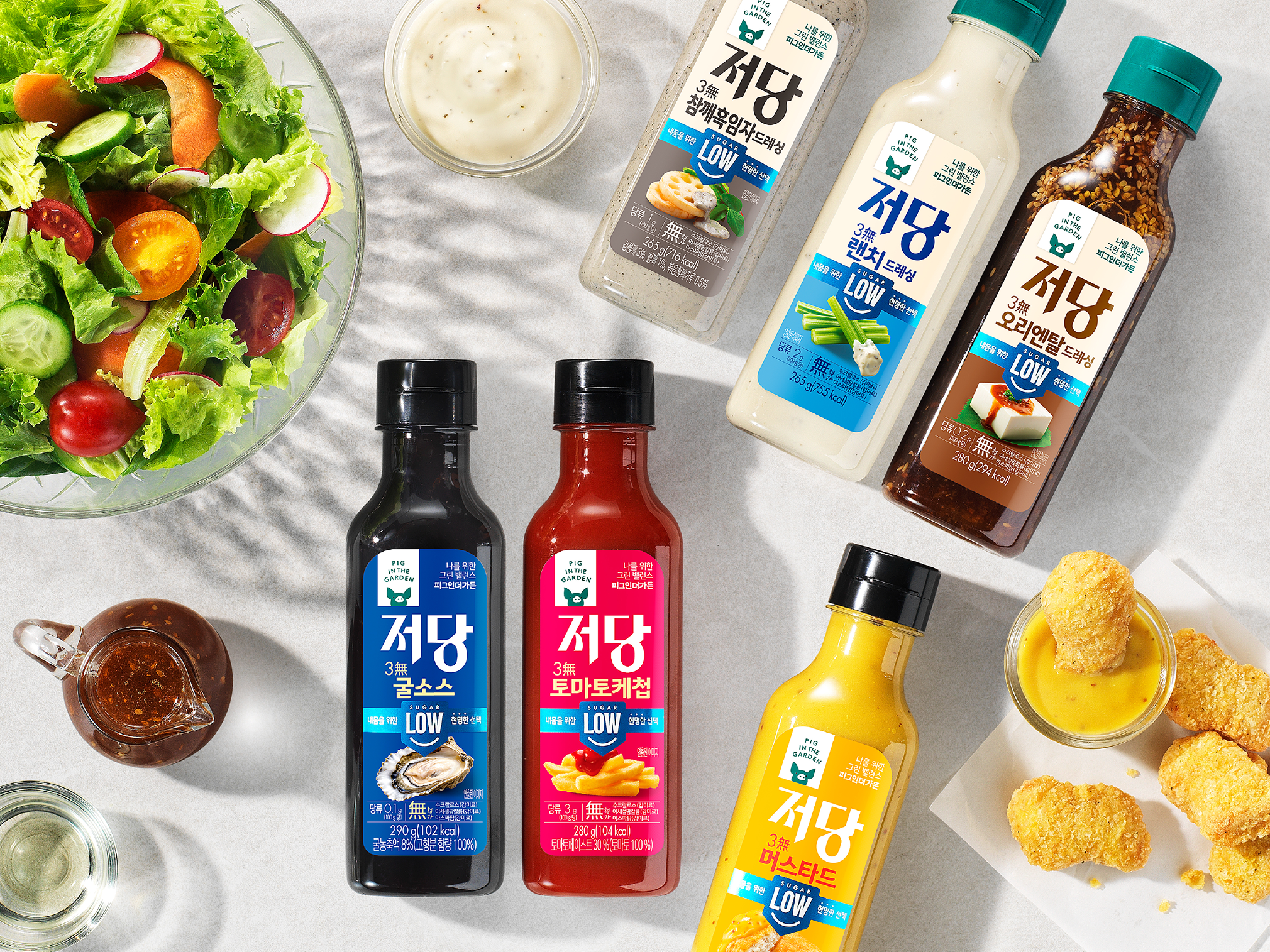
With the launch of 12 low-sugar sauces & dressings and 2 low-sugar “Witch’s Soups,” the brand is evolving into a “Green Balance Lifestyle Brand” that brings plant-based freshness into everyday meals.
For those who care not only about salads and protein meals, but also the sauce that goes with them, this is a welcome change. So how did PIG IN THE GARDEN design this lineup? Let’s follow their wellness journey.
[💬 Definition] What does wellness mean to PIG IN THE GARDEN?
Under the slogan “Green Balance, For Me,” PIG IN THE GARDEN is a plant-based wellness brand that uses vegetables, fruits, and grains to propose healthy and delicious food culture.
What matters most is not simply eating light meals, and not just eating more plants.
It’s about exploring recipes that best highlight the freshness and nutrition of plant-based ingredients, and creating options that make healthy eating part of everyday life. For PIG IN THE GARDEN, wellness is closer to a “sustainable routine” than a “restrictive diet.”
A way of living where you don’t have to give up enjoyment for health—that is where their wellness philosophy begins.
🗒️ Research Note — Filling 24 Hours with Health ⏰ |
Q. How would you describe PIG IN THE GARDEN in one sentence? A. It is a “well-balanced lifestyle brand” that goes beyond salads to bring the nutrition and freshness of plants into everyday meals, creating a green wellness routine in daily life. |
Q. What does “Green Balance, For Me” mean? A. It means preserving the natural energy of vegetables, fruits, and grains and making that freshness a natural part of a wellness routine in daily life. |
Q. What is the brand currently focusing on most? A. Recently, we have also been focusing on designing meals that are smarter and more sustainable by taking sugar content into account. In addition, since nutritional balance alone is not enough—what matters equally is the quality of the ingredients that those nutrients come from—we aimed to fully leverage plant-based nutrition and flavor in our low-sugar sauces, dressings, and low-sugar “Witch’s Soup.” |
— PIG IN THE GARDEN Representative |
[🧪 Experiment Note 01] Turning healthy food into a tasty meal 🥗
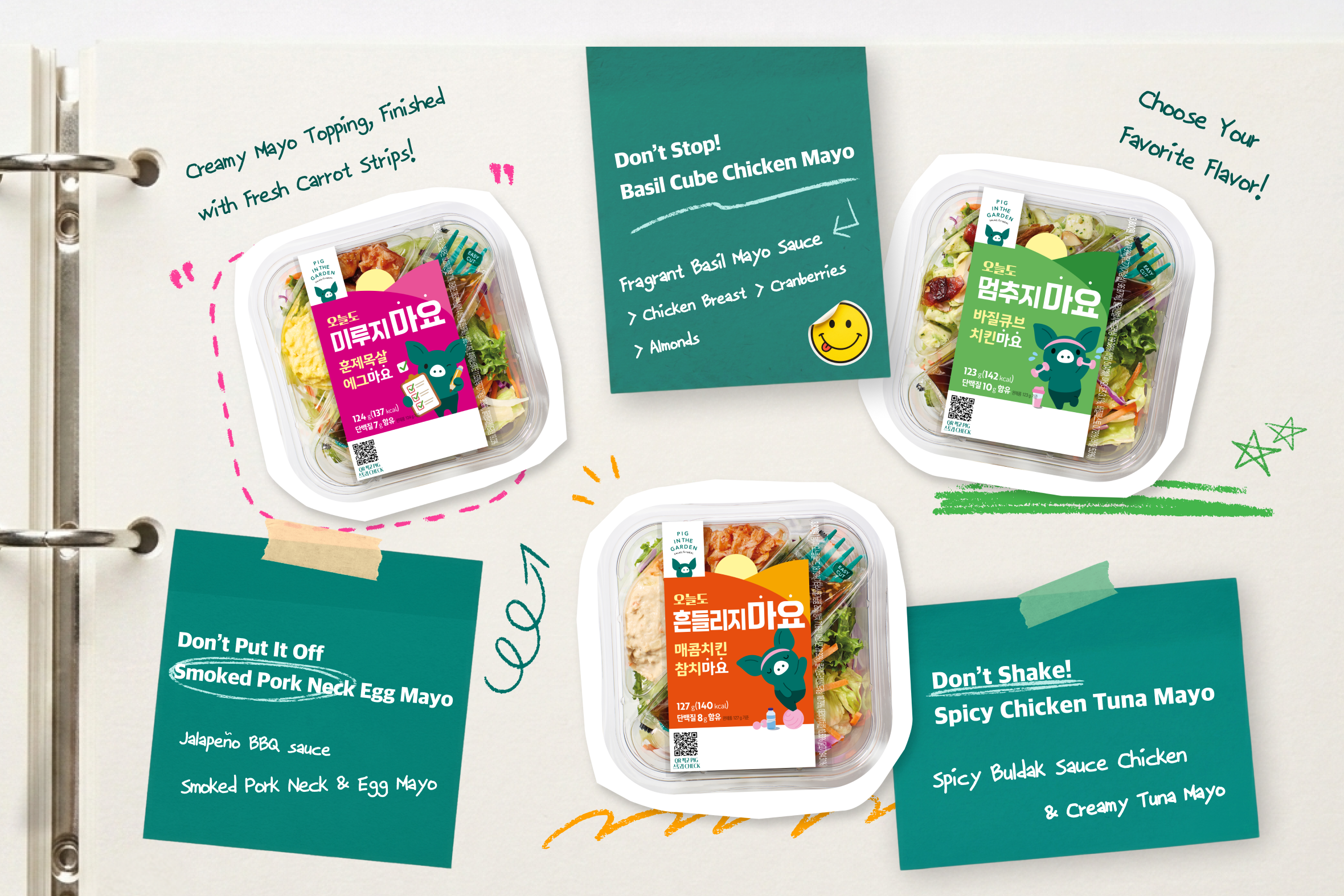
PIG IN THE GARDEN ‘s first experiment began with rethinking salad as a “complete, satisfying meal rather than a light side dish.” Why is it so hard for salads to become a daily routine? Because when they’re too light, they quickly feel insufficient—and when they’re made filling, the combinations often become heavy or overly complex.
That’s why PIG IN THE GARDEN started by challenging the perception that “salad equals a restrictive diet,” and instead began exploring ways to enjoy vegetables in a more satisfying and flavorful way. At the core of this approach is “composition.” A thoughtfully designed structure where flavor, satiety, and freshness naturally come together in a single pack—without the need to add or think about additional ingredients. In other words, it is designed to become “a complete meal, instantly, with no hesitation.”
A representative example is the <Mayo! Salad 3 varieties>. It elevates satisfaction within a single pack by combining a creamy mayo topping with a fresh carrot-based vegetable mix. The line is also designed in multiple flavor options so that consumers can choose according to their taste preferences.
🗒️ Research Note — From Salad to a 24-Hour Lifestyle |
Q. How far has PIG IN THE GARDEN expanded beyond salads? A. Through its early offline salad stores and B2C ready-to-eat salad products, PIG IN THE GARDEN established a new standard for what a “fresh meal” means. After salads, the brand expanded into scoop salads and dressings designed to complement salads and vegetables, strengthening its position in the market. It further completed its product ecosystem by launching “white meat” products under the PIG IN THE GARDEN brand—high-quality protein offerings that enhance the overall lineup. |
Q. If there is one core principle the brand follows to challenge the perception that “healthy food is not tasty,” what would it be? A. All products are developed based on the principle of “Well Balanced.” The brand adheres to three guiding values to ensure harmony between taste and nutrition: Fresh 4 (ultimate freshness), Balance (nutritional balance), and Healthy Pleasure (enjoyable wellness). |
— PIG IN THE GARDEN Representative |
[🧪 Experiment Note 02] Rebuilding Broken Routines Through Sauce with “Low Sugar” 🥣
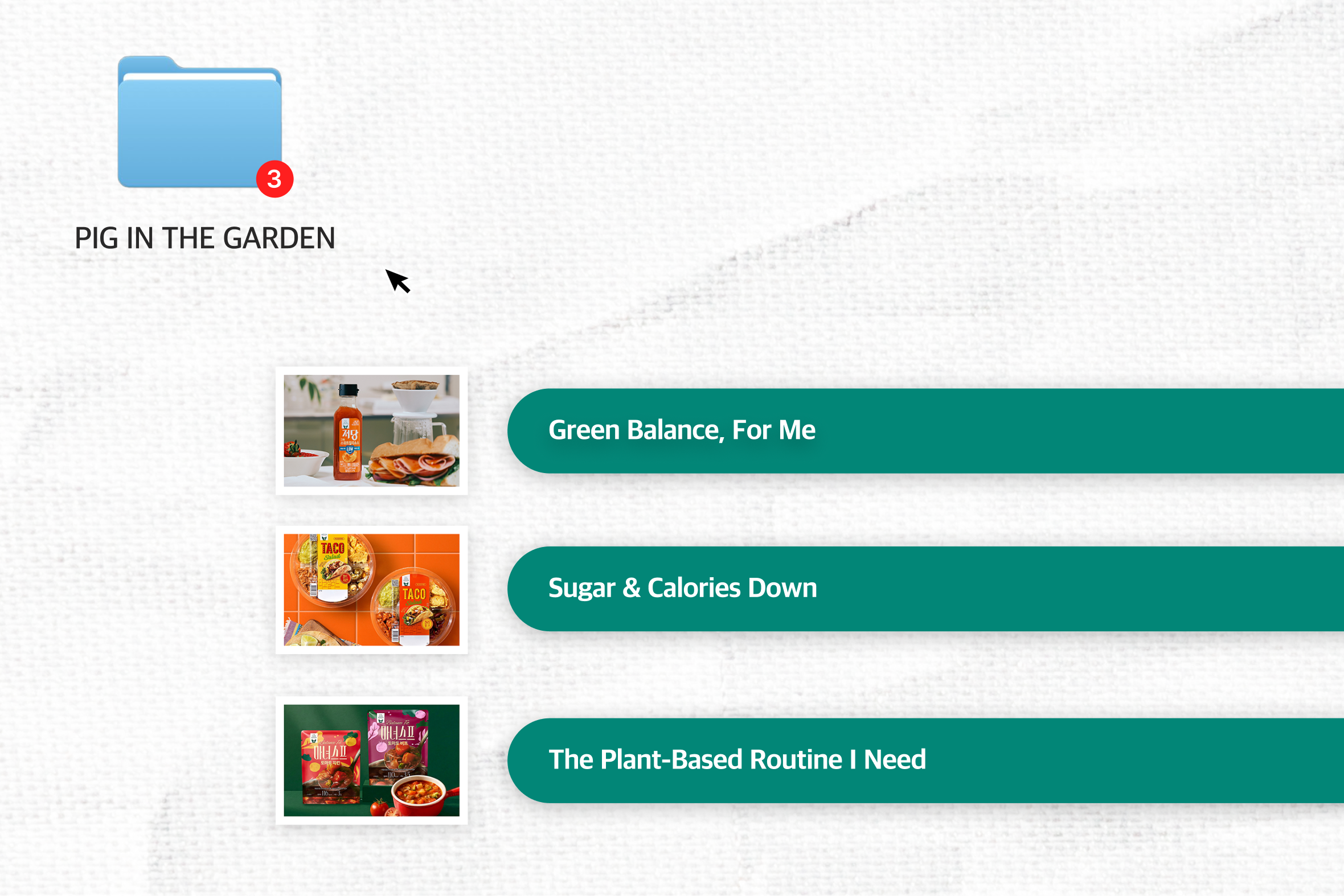
PIG IN THE GARDEN raised another question here: “If one meal is taken care of, what comes next?” Even when a salad bowl is well prepared, the brand realized that balance can still be disrupted by something as simple as a single sauce.
In recent years, among people who follow a healthy diet, it has become increasingly common to keep a variety of low-sugar sauces at home and use them for cooking or as dips for bread, sandwiches, and chicken breast. As consumers become more conscious about maintaining flavor while carefully checking ingredients even in something as simple as a sauce, this culture has continued to grow.
In response, PIG IN THE GARDEN aimed to position sauces and dressings not as mere “side items” to a main dish, but as essential components that complete a healthy everyday meal.
The core of the formulation lies in two principles:
✔️ No artificial sweeteners (sucralose, acesulfame potassium, aspartame)
✔️ Use of allulose and stevia extract to deliver low sugar while preserving the original flavor of the sauce
By combining these approaches, PIG IN THE GARDEN focused on minimizing the aftertaste often associated with sweeteners in low-sugar products, while preserving a natural sweetness and rich flavor profile.
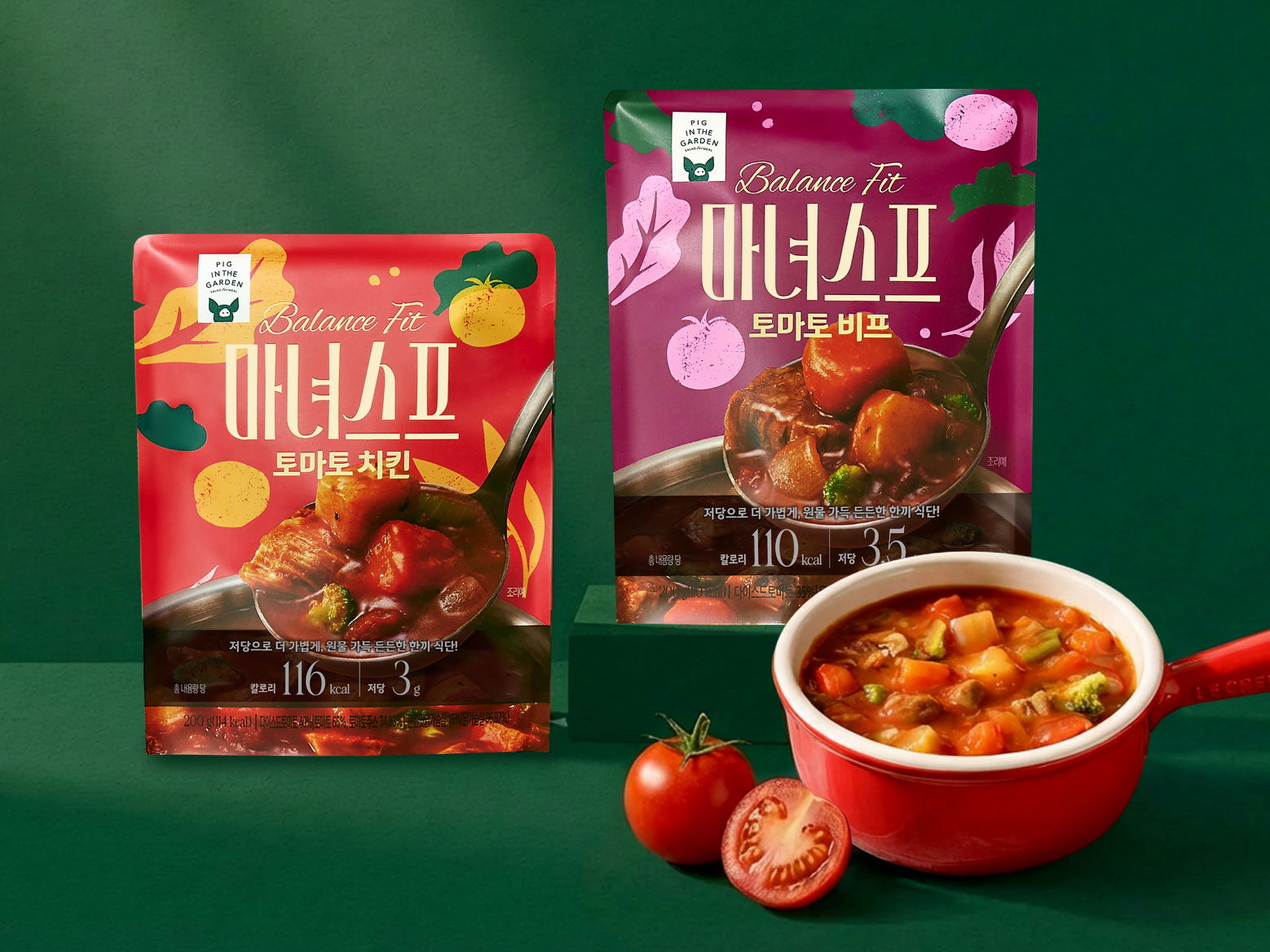
From the same perspective, PIG IN THE GARDEN also introduced a new low-sugar “Witch’s Soup.” Witch’s Soup is widely known as a tomato-based diet meal, but depending on processed sauces or added ingredients, its sugar content can easily increase, and its nutritional balance—such as protein and dietary fiber—can become less optimal.
To address this, PIG IN THE GARDEN applied a low-sugar formulation to reduce sugar burden while generously incorporating tomatoes and a variety of vegetables and plant-based ingredients, designing it as a well-balanced, complete meal. Whether on days when you want something light or when you need a more filling option, the low-sugar Witch’s Soup offers another convenient way to maintain a “Green Wellness” routine within a busy everyday life.
🗒️ Research Note — Adding Healthy Detail to Daily Routines! |
Q. Why have low-sugar sauces and dressings become “must-have items”? A. In today’s food market, a “Low Spec” food trend is rapidly expanding, going beyond simply reducing calories to carefully managing sugar content as well. In particular, among consumers who follow healthy diets, it has become increasingly common to pay close attention not only to core ingredients like salads or protein-based meals, but also to the sugar content in sauces and dressings—making this a normalized part of everyday consumption behavior. |
Q. What was the first concern you wanted to solve in low-sugar products? A. The goal was to address two key concerns held by health-conscious consumers: first, a vague resistance to artificial sweeteners, and second, the unfamiliar aftertaste often associated with low-sugar products. |
Q. So how did you approach flavor development? A. The focus was on preserving the original flavor of the sauce as much as possible by using allulose and stevia extract. |
— PIG IN THE GARDEN Representative |
[💡 Validation] Green Wellness is Now About “Sustainability” Rather Than “Management” ☀️
There is a reason PIG IN THE GARDEN designed its lineup this way. Today’s consumers are no longer focused on wellness as a matter of “I should eat healthy,” but are increasingly shifting toward the question of “How can I keep this going?”—moving wellness from intention into the realm of everyday habits.
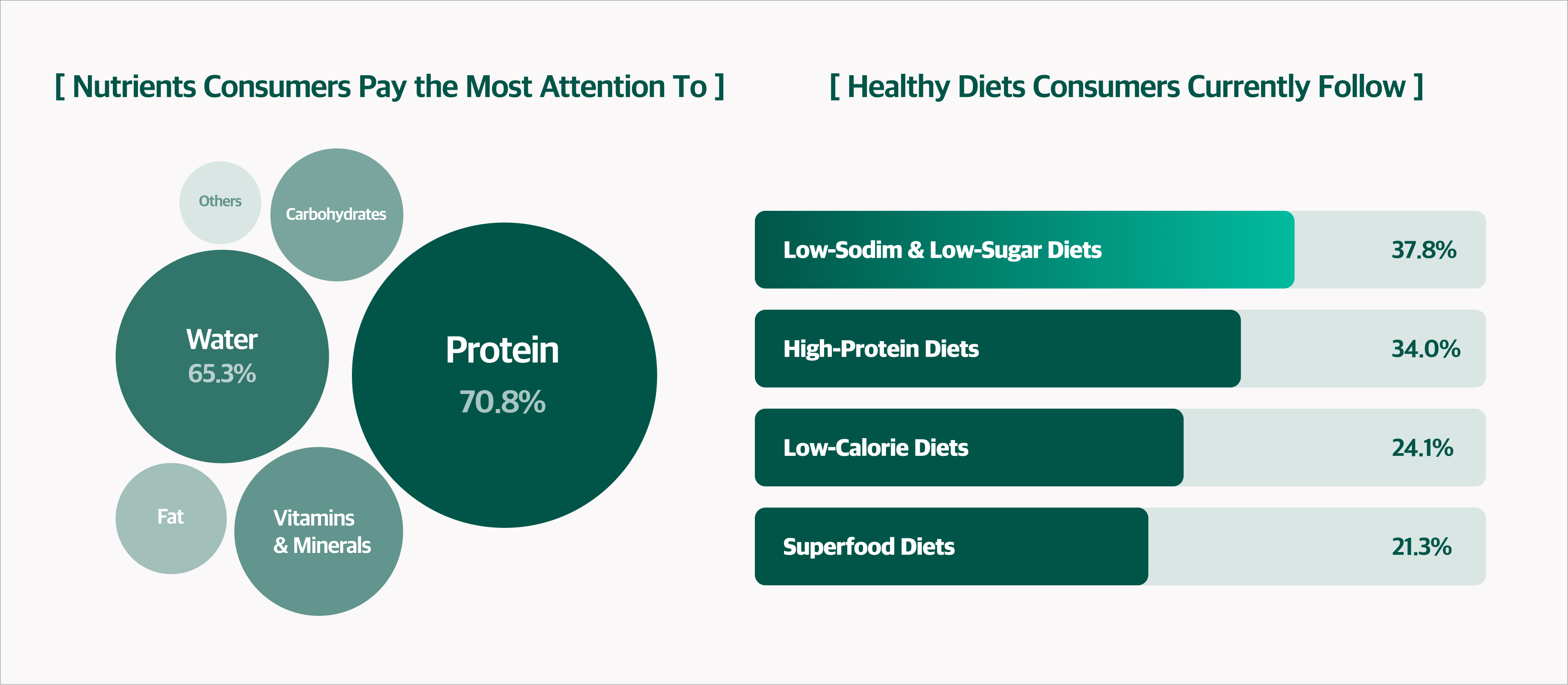
(Source: OpenSurvey Health & Wellness Trends Report 2025, September 2025)
According to the OpenSurvey report, the most commonly practiced healthy diet is low-salt and low-sugar eating (37.8%), while the most closely monitored nutrient is protein (70.8%). Today’s healthy diet trends are shifting from simply “eating less” to an approach that focuses on getting the nutrients you need while reducing unnecessary intake. With the rise of the low-sugar trend, more people are also managing sugar intake in precise numerical terms rather than estimating it roughly.
However, even with growing interest, making healthy eating part of everyday life is not getting any easier. As more people eat alone and meal patterns become increasingly fragmented, it has actually become more difficult to maintain a well-balanced diet in a single sitting.
PIG IN THE GARDEN ‘s lineup starts precisely from this point. It builds meal balance through salads, fills in dietary details with low-sugar sauces and dressings, and expands simple meal options with Witch’s Soup. The goal is to ensure that healthy choices do not end with a single day, but continue as part of a sustainable daily routine.
[✅ Conclusion] In the end, wellness is not about a “perfect day,” but a “sustainable day” 🐷
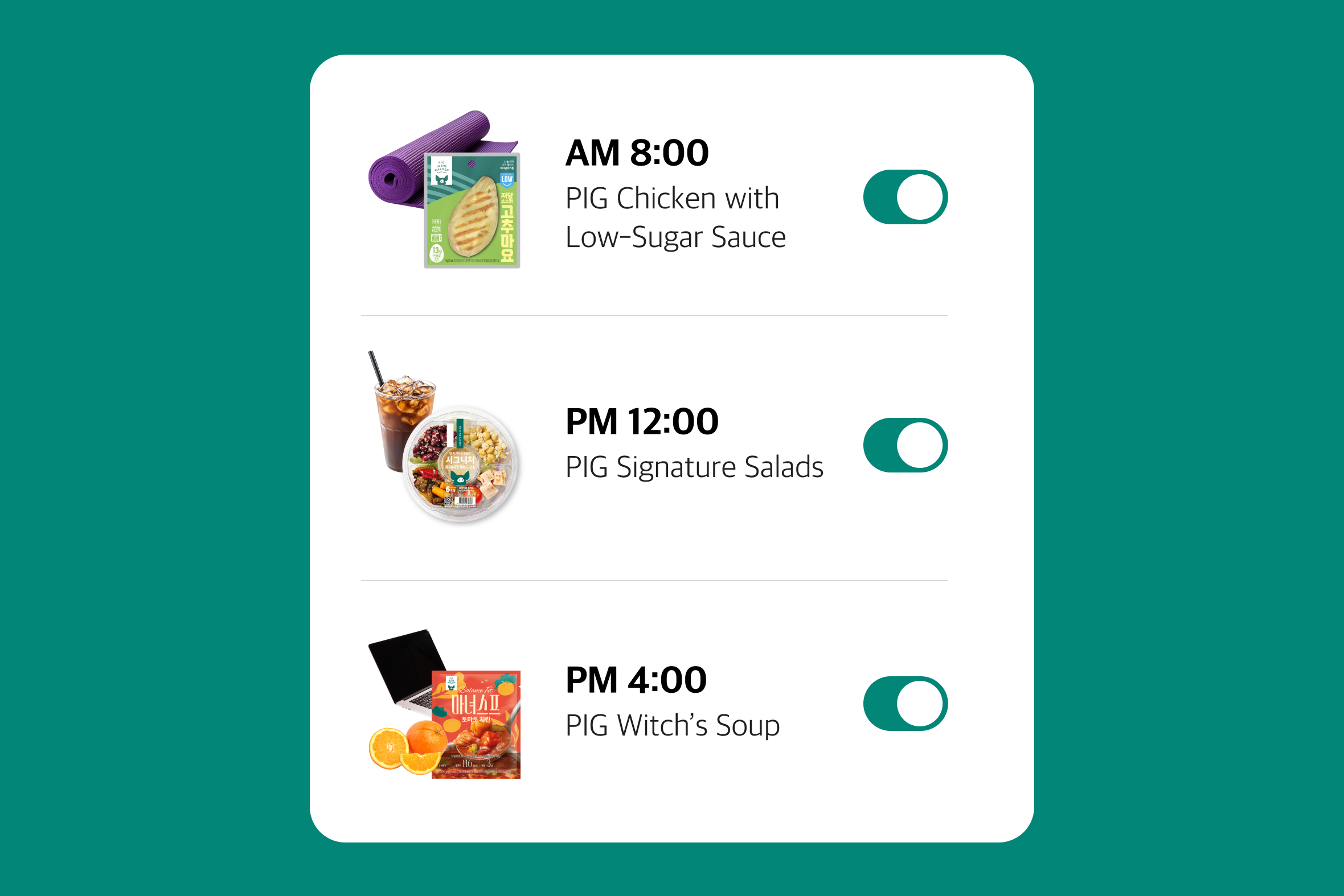
Ultimately, wellness is not about maintaining a perfect diet every single day. It is closer to making slightly better choices, little by little, at today’s table. From breakfast to lunch, dinner, and even those moments when you just need a light snack, PIG IN THE GARDEN continues to expand wellness options that fit into the various moments of your day—helping your choices become easier, and more enjoyable, every step of the way.
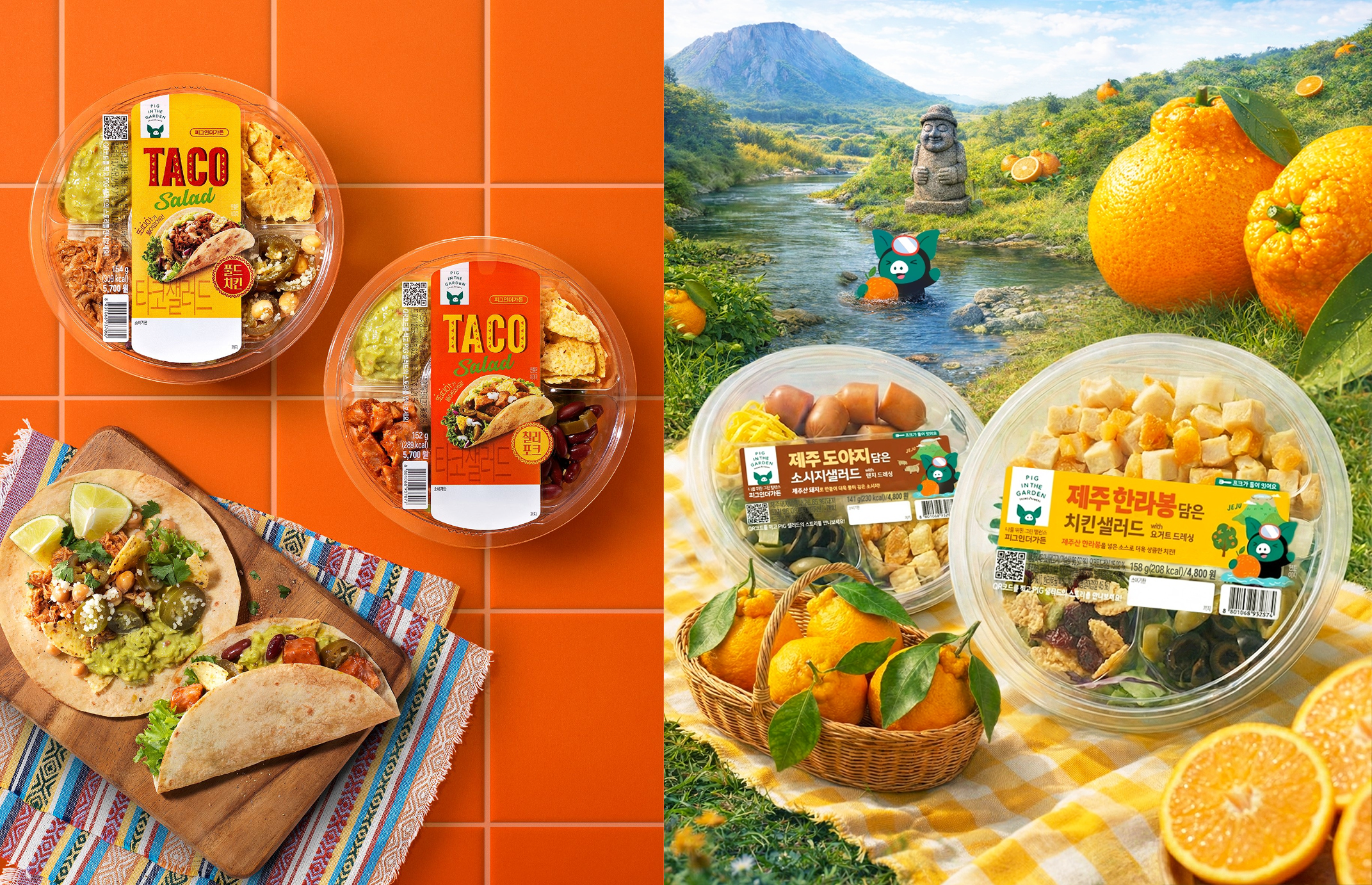
And moving forward, true to its slogan “Green Balance for Me,” PIG IN THE GARDEN plans to expand its product categories with plant-based items such as convenient handheld shakes, granola chips, and functional beverages. The goal is to fill the entire 24 hours of the day with an easier and more sustainable wellness routine.
When you want to stay healthy even a busy daily life, when you need a simple yet nutritionally balanced meal, or when you want to enjoy something delicious while reducing sugar intake— PIG IN THE GARDEN will continue to be your most reliable choice throughout the day. 🐷
🗒️ Research Note — PIG IN THE GARDEN s Next Chapter |
Q. What kind of brand do you want to be remembered as in the future? A. We want to be remembered not just as a brand that makes great salads, but as a “Well-Balanced lifestyle brand” that proposes healthy balance in everyday life. |
Q. If you had to summarize your long-term goal in one sentence, what would it be? A. Our goal is to become a brand that helps consumers maintain both health and enjoyment without compromise—continuously filling small moments in everyday life with balance through a wide range of wellness solutions that combine taste and nutrition. |
— PIG IN THE GARDEN Representative |
That wraps up today’s research log! How did you enjoy exploring the story of Green Wellness with PIG IN THE GARDEN? We’ll be back with another research log, featuring more fun and insightful brand stories from Samlip. See you next time! 👋